Sizing Information
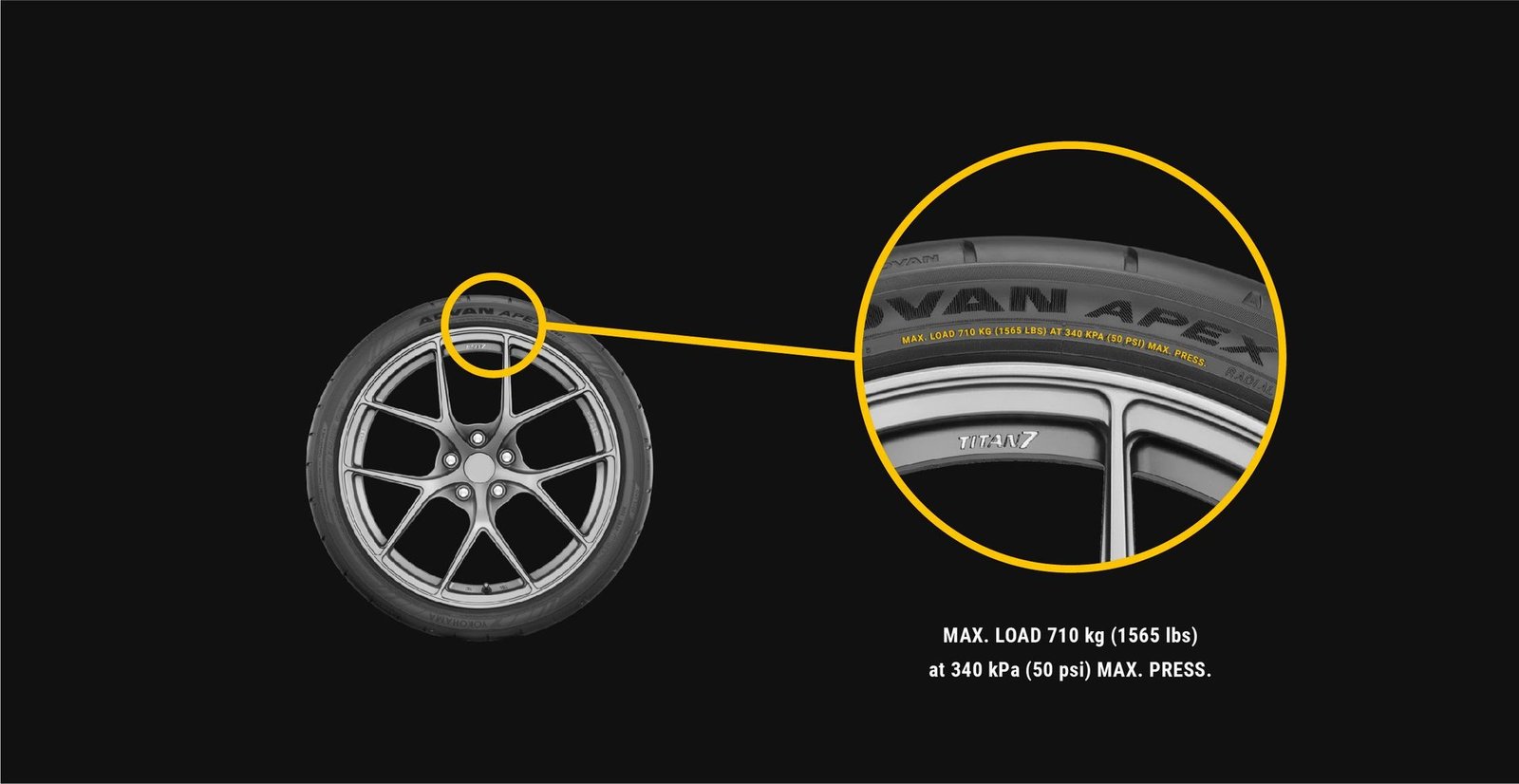
Sizing information molded on the tire sidewall provides a significant amount of detail about the tire. Once you know how to decode the data, you’ll be able to better understand the tire's intended purpose, dimensions, load capacity, speed and much more.
1Size Designation
Some tire size designations start with a letter(s) that identify the type of vehicle and/or type of service for which they were designed. The typical letter for passenger and light truck tires would be P, LT, T and C.
- P: Passenger tires designed based on TRA standards.
- Euro-metric: Designed based on ETRTO without letters.
- LT: Light truck-metric sizes designed for pickups.
- T: Temporary spare or mini-spare.
- C: Commercial tread for heavy vans/trucks.
2Tire Dimensions
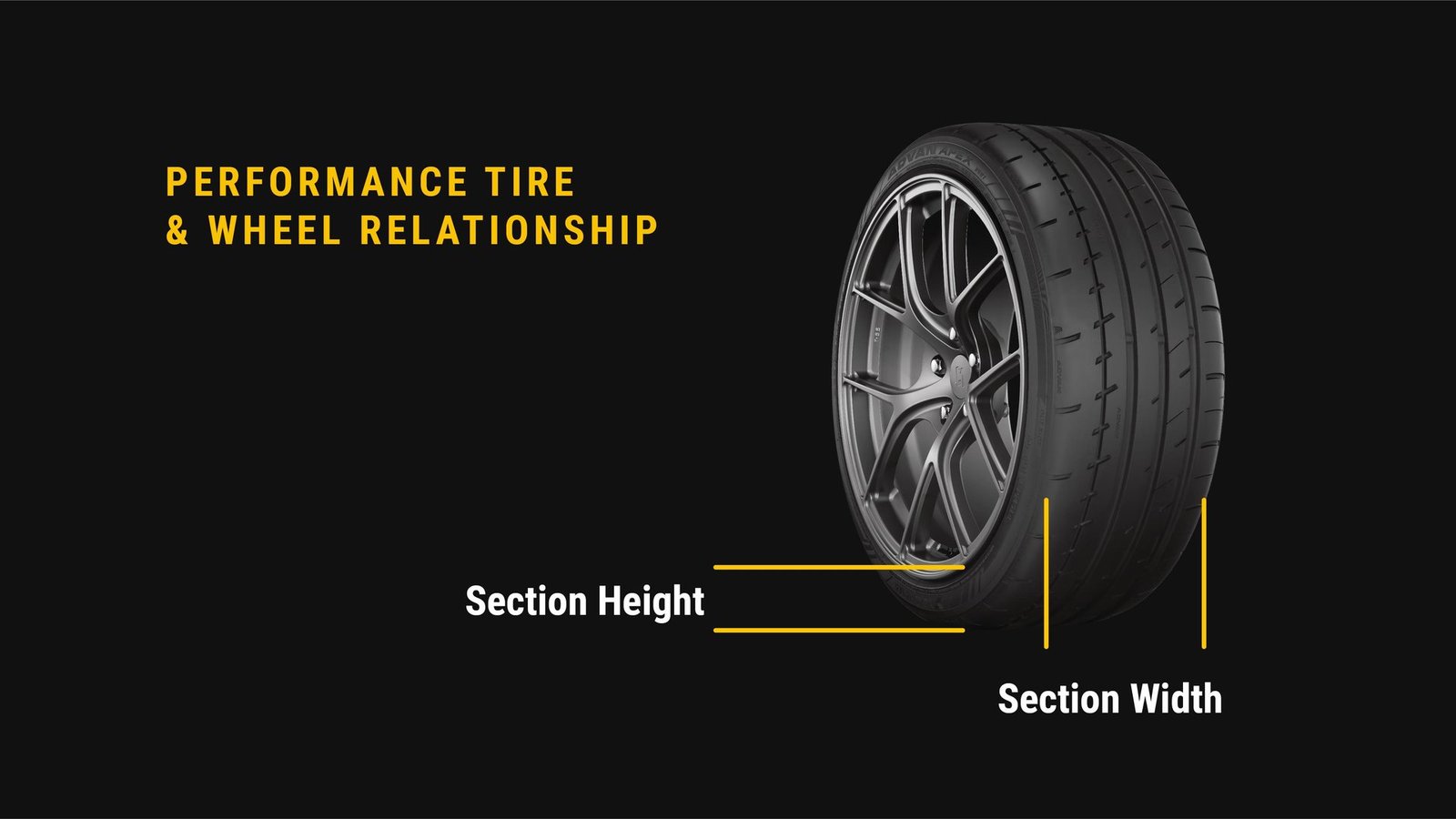
The three-digit number identifies the tire’s section width in millimeters. The two-digit number following the section width identifies the tire’s aspect ratio (percentage of the section height divided by the section width).
A letter R following the tire aspect ratio identifies the tire's construction as a radial tire. The last two digits on tire size refer to the rim diameter, or the size of the wheel that the tire is intended to fit.
Service Descriptions
Service descriptions show the load index (maximum loading capacity) and the speed rating (maximum speed allowed).
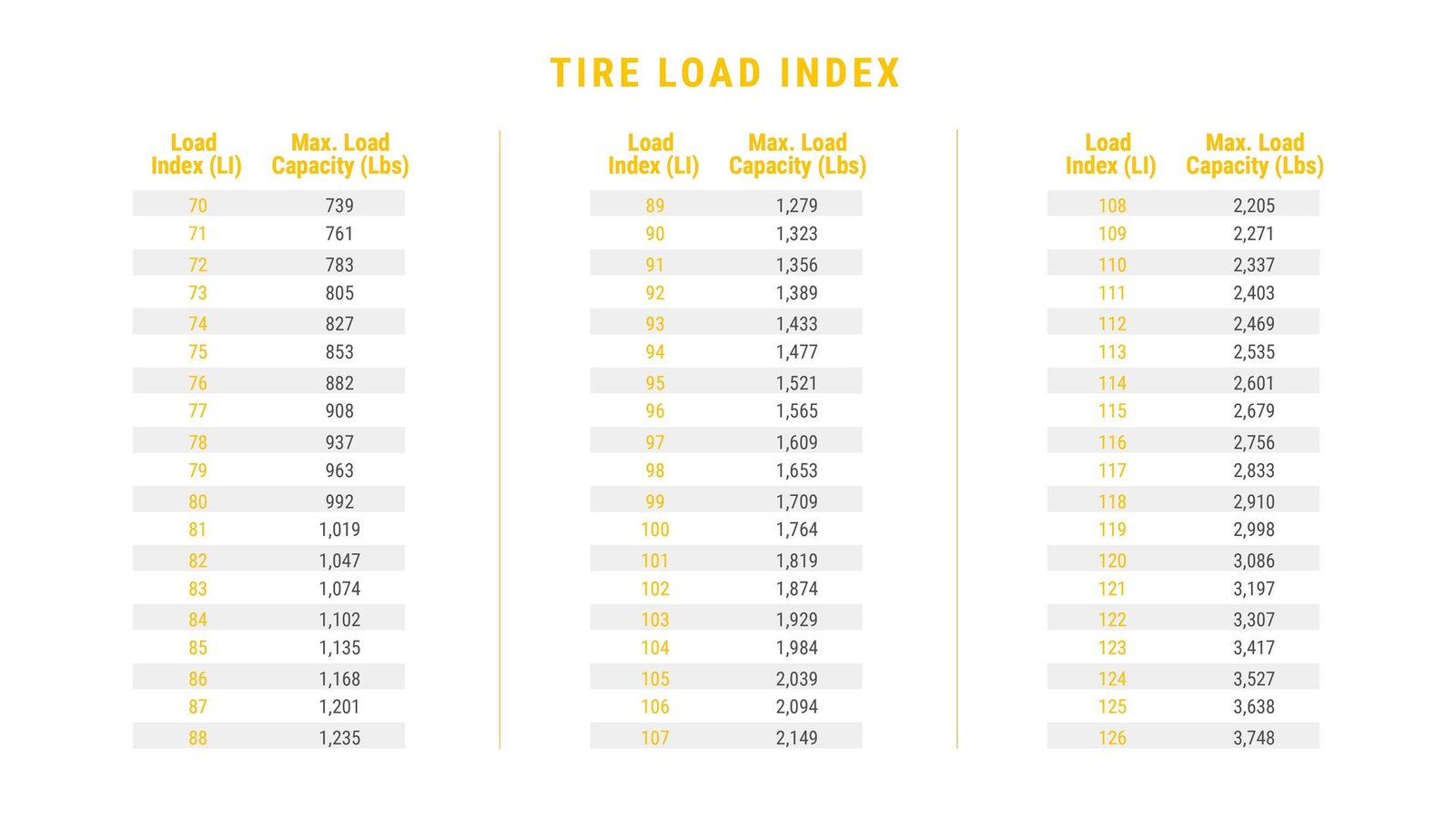
Passenger Load Index
Shows typical passenger tire load index and maximum capacity. e.g. an index of 116 = 2,756 lbs per tire.
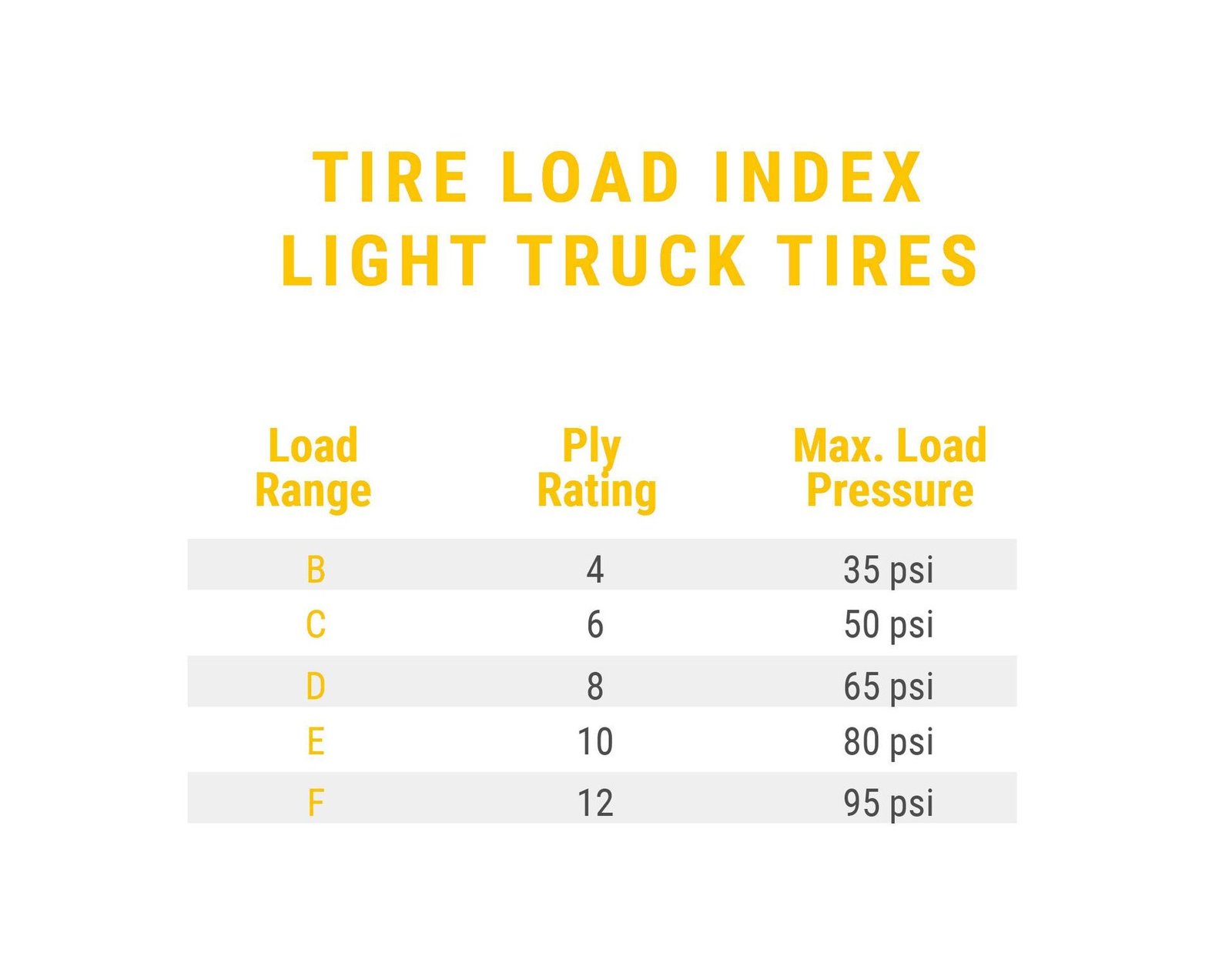
Light Truck Load Index
Varies from load range B to F. First number is max load single, second is max load dual application.
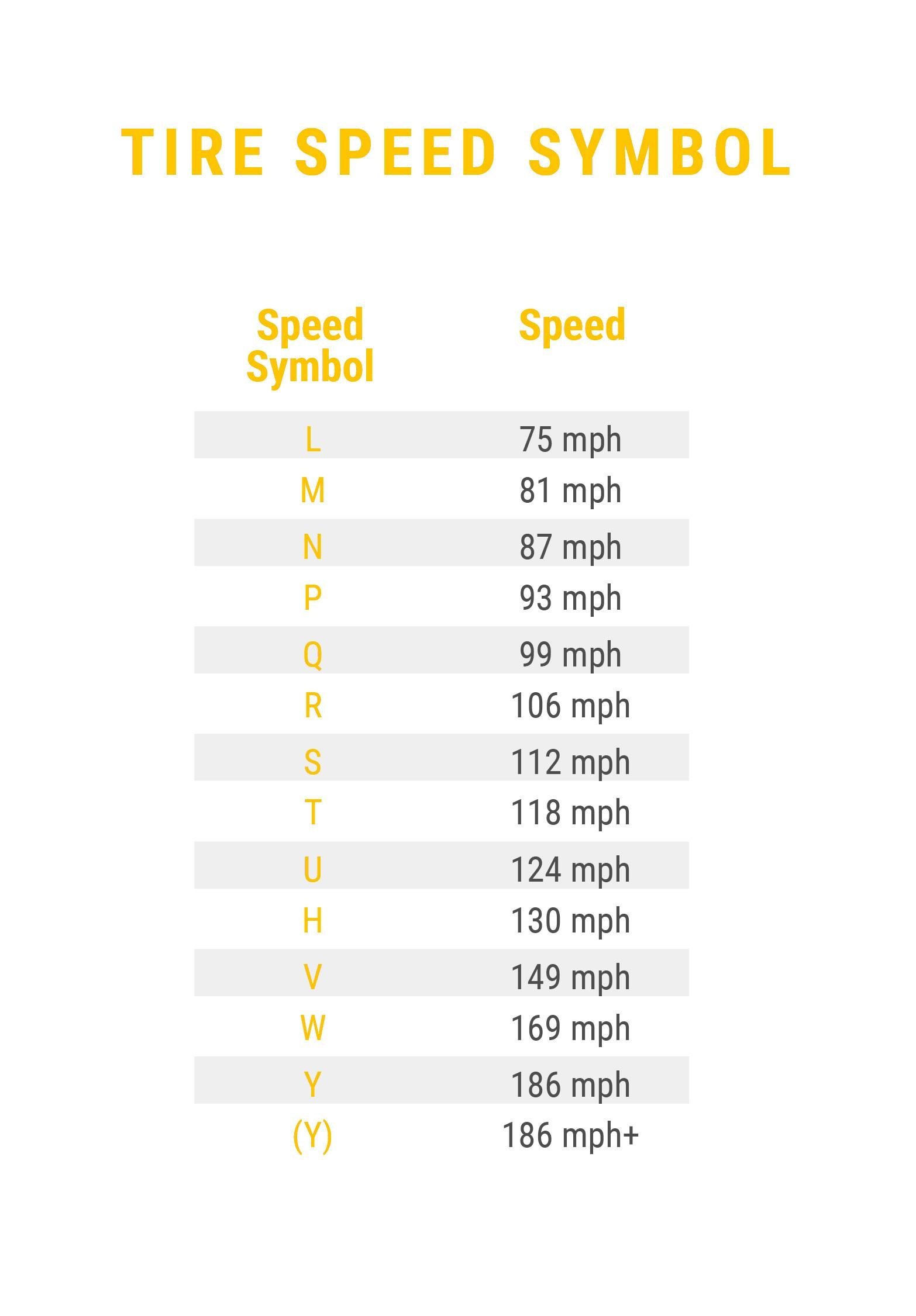
Speed Capability
Established to match the speed capability of tires with the top speed of vehicles. Exceeding capacity causes sudden failure.
Tire Spinning
Do not allow speedometer to exceed 35 mph if tires are spinning (mud, snow, etc). Spinning tire speed can double and quickly exceed limits.
Never allow anyone to stand behind a spinning tire. Disintegrating tires can cause severe damage or injury.
Inflation Pressure
Recommended pressure is found in the driver's door panel placard, NOT the maximum pressure on the sidewall.
Warning: Underinflation/overloading causes internal damage. Overinflation makes tires prone to puncture or sudden impact breaks.
Ready to find your perfect tyre?
Use our advanced Tyre Finder to browse options tailored to your exact vehicle and needs, or visit a dealer for expert advice.